
When Technical Experts Become Spokespeople: Communication Skills Leaders Need

When Technical Experts Become Spokespeople: Communication Skills Leaders Need

In many organizations, leadership roles are filled by people with the deepest technical expertise. The engineer who understands the system better than anyone else, the scientist whose research drives innovation, or the analyst whose insights consistently shape decisions often becomes the person leadership turns to when greater responsibility is needed.

This progression makes sense. Individuals with deep knowledge of the work often bring valuable insight to strategy, operations, and problem solving.

At the same time, the move from technical expert to leader changes the nature of the role in ways that are not always immediately apparent. The habits that support success as a technical specialist—detailed analysis, careful explanations, and the ability to personally solve complex problems—remain valuable. But leadership increasingly requires a different kind of communication.

Instead of explaining systems primarily to colleagues within their discipline, leaders must often explain ideas, decisions, and developments to a much broader set of audiences.

Those audiences may include executives, board members, investors, regulators, journalists, and the public.

As technical experts move into leadership roles, several communication shifts tend to occur.

From Specialist Communication to Organizational Communication

Technical experts often communicate primarily with colleagues who share a similar background. Conversations focus on analysis, methods, and the mechanics of how systems function.

Leadership expands the scope of those conversations. Instead of communicating only within their own field, leaders must often translate complex information so that people with different expertise can understand its implications.

Executives may want to understand the strategic impact of a technical development. Board members may want clarity about risks or investment decisions. Colleagues from other departments may need to understand how technical work connects to broader organizational goals.

The ability to explain complex ideas clearly across disciplines becomes a critical leadership skill.

From Solving Problems to Explaining Decisions

Technical experts often demonstrate their value by diagnosing problems and developing solutions.

Leaders still rely on that judgment, but their communication responsibilities evolve. Instead of presenting a technical solution alone, they must explain the reasoning behind decisions and help others understand the trade-offs involved.

This becomes particularly important when speaking with senior leadership. Executives and board members rarely need a detailed walkthrough of the technical process. What they need to understand are the implications: the decision being proposed, the potential risks, and how the issue affects the organization’s direction.

Communicating those elements clearly helps decision-makers act with confidence.

From Technical Detail to Strategic Context

Technical experts often present information through data, models, and system explanations.

Leadership communication operates at a broader level. Instead of focusing primarily on the mechanics of how something works, leaders help others understand why the work matters.

This shift becomes especially visible in presentations.

A technical expert might present analysis about a system’s performance. A leader presenting the same information may need to explain how that performance affects business results, customer outcomes, regulatory considerations, or long-term strategy.

In these situations, the challenge is not simply to explain the work. It is to communicate the meaning of the work.

Research from MIT Sloan School of Management highlights the role leaders play in helping organizations interpret complex environments. When information is distributed across specialized teams, leaders often help others understand what the information means and how it connects to larger priorities.

From Internal Communication to Public Communication

As technical experts move into leadership roles, their communication responsibilities often extend beyond the organization.

Leaders may find themselves speaking with regulators, investors, journalists, or members of the public about the organization’s work. In those settings, they represent not only their expertise but also the credibility and reputation of the organization.

Communicating clearly under scrutiny requires a different set of skills. Leaders must be able to explain complex topics in language that non-specialists can understand while remaining accurate, composed, and thoughtful in their responses.

This is particularly important when organizations face challenging questions or heightened public attention.

From Technical Credibility to Leadership Presence

Technical experts often establish credibility through analytical precision and depth of knowledge.

Leadership roles require those strengths, but they also introduce another dimension: leadership presence.

Leaders are frequently asked to communicate in situations where their ability to remain clear, composed, and confident influences how their ideas are received. They may need to present major initiatives, respond to difficult questions from executives, or represent the organization publicly during important moments.

In these situations, communication becomes a visible part of leadership.

The ability to present ideas clearly, listen carefully, respond thoughtfully, and remain calm under pressure can shape how decisions are made and how organizations are perceived.

For many technical experts, developing these communication skills—public speaking, executive communication, and media readiness—becomes an important part of the transition into leadership.

When Expertise Meets Leadership Communication

Technical expertise does not become less important when professionals move into leadership roles. Instead, its influence expands.

When leaders combine deep knowledge with strong communication, emotional intelligence, and the ability to speak clearly to different audiences, their expertise becomes far more powerful.

It becomes a foundation not only for solving problems, but for guiding decisions, shaping understanding, and representing the organization with clarity and credibility.

Resources

Harvard Business Review / Harvard Business School – Watkins, Michael D. The First 90 Days: Proven Strategies for Getting Up to Speed Faster and Smarter.
https://hbr.org/2013/01/the-first-90-days

Hill, Linda A. “Becoming the Boss.” Harvard Business Review. – https://hbr.org/2007/01/becoming-the-boss

MIT Sloan School of Management – Ancona, Deborah; Malone, Thomas; Orlikowski, Wanda; Senge, Peter. “In Praise of the Incomplete Leader.” MIT Sloan Management Review. – https://sloanreview.mit.edu/article/in-praise-of-the-incomplete-leader/

National Bureau of Economic Research – Goodall, Amanda H. “Physician-Leaders and Hospital Performance.”
https://www.nber.org/papers/w16520

McKinsey & Company – Leadership research on organizational effectiveness and strategic alignment.
https://www.mckinsey.com/capabilities/people-and-organizational-performance

Lisa Elia, Media Trainer, Presentation Trainer, and Communication Expert, and Founder of Expert Media Training

About Lisa Elia

Lisa Elia is a leadership communication strategist who works with executives, founders, and expert teams to strengthen how ideas are communicated, understood, and acted upon inside organizations. Through her SpeakerShift Leadership Communication Accelerator and private advisory work, she helps leaders develop greater clarity, executive presence, and influence in high-stakes conversations—from leadership meetings and major presentations to investor discussions and critical organizational moments. Organizations also license her leadership communication programs to strengthen communication capabilities across their teams. Learn more at lisaelia.com.

To arrange a complimentary consultation, visit https://calendly.com/emt-appt/consultation-lisa-elia

Six Leadership Communication Habits That Drive Alignment and Results

Six Leadership Communication Habits That Drive Alignment and Results

Leadership communication plays a defining role in how effectively organizations operate. The way leaders explain ideas, share priorities, and engage in conversation influences how well teams understand direction and how confidently they move work forward.

When communication is clear and intentional, it creates an environment where ideas can travel more easily. Teams understand the reasoning behind decisions, priorities remain visible, and people are better able to coordinate their efforts. Over time, this clarity helps organizations turn strategy into meaningful progress.

While leadership communication includes many skills, a few core habits tend to make the greatest difference.

  1. Clear Thinking Leads to Clear Communication
    Effective leadership communication begins with organized thinking. When leaders take the time to clarify their ideas before sharing them, others are able to understand priorities more quickly.

    Clear messages reduce ambiguity and prevent teams from drawing different conclusions about the same direction. When expectations and goals are communicated thoughtfully, people can focus their attention on execution rather than interpretation.

  2. Providing Context Around Decisions
    People work more effectively when they understand the reasoning behind decisions. Leaders who explain the broader context—such as goals, constraints, and strategic considerations—help others see how decisions fit into the larger picture.

    With that understanding, teams are better equipped to make thoughtful choices within their own roles. Instead of simply following instructions, they can adapt their work in ways that support the organization’s overall direction.

  3. Listening to Understand
    Communication is not only about expressing ideas. It also involves absorbing information from others. Leaders who listen carefully gain valuable insights about challenges, emerging opportunities, and perspectives from across the organization.

    Intentional listening also encourages participation. When people know their perspectives are welcomed and considered, they are more likely to contribute ideas that strengthen decision-making and innovation.

  4. Reinforcing Priorities Consistently
    Consistency helps organizations maintain focus. When leaders communicate priorities in a steady and consistent way, teams gain clarity about what matters most.

    Without consistent messaging, different groups may interpret strategy in slightly different ways. Clear and repeated communication ensures that teams remain aligned as initiatives evolve.

  5. Communicating With Confidence and Composure
    The way leaders communicate can influence how their ideas are perceived. When leaders speak with calm confidence and composure, it signals that their direction is thoughtful and well considered.

    This presence does not require dramatic delivery. It often comes from preparation, clarity of thought, and the ability to engage in discussion without becoming defensive or uncertain.

  6. Creating Shared Understanding Across Teams
    The ultimate purpose of leadership communication is to build shared understanding. When people across an organization understand priorities, goals, and reasoning, collaboration becomes more natural.

    Teams can coordinate their efforts more easily because they are working from the same understanding of the organization’s direction and objectives.

The Organizational Effect

These communication habits may seem simple, yet their influence can extend throughout an organization. Clear communication helps ideas travel faster, strengthens alignment among teams, and supports more thoughtful decision-making.

When leaders communicate with clarity, context, and consistency, organizations gain the ability to move forward with greater focus and coordination. Leadership communication, in this sense, becomes one of the most powerful tools for turning strategy into meaningful action.

Lisa Elia, Media Trainer, Presentation Trainer, and Communication Expert, and Founder of Expert Media Training

About Lisa Elia

Lisa Elia is a leadership communication strategist who works with executives, founders, and expert teams to strengthen how ideas are communicated, understood, and acted upon inside organizations. Through her SpeakerShift Leadership Communication Accelerator and private advisory work, she helps leaders develop greater clarity, executive presence, and influence in high-stakes conversations—from leadership meetings and major presentations to investor discussions and critical organizational moments. Organizations also license her leadership communication programs to strengthen communication capabilities across their teams. Learn more at lisaelia.com.

To arrange a complimentary consultation, visit https://calendly.com/emt-appt/consultation-lisa-elia

The Opportunity Cost of Our National Conversation

The Opportunity Cost of Our National Conversation

In business, leaders constantly weigh opportunity cost. Every hour, dollar, and unit of attention spent on one priority is time, money, and energy that cannot be spent on another. Strategy is not just about what you choose to pursue, but what you choose to delay, ignore, or abandon because resources are limited.

The same principle applies to communication, and at a national level, the stakes are far higher.

Every headline, policy debate, press conference, and social media exchange draws from a shared pool of public attention. That attention, like financial capital, is limited. Where it is directed shapes what a society is able to build, solve, and achieve.

Public debate is essential in a healthy democracy. Open discussion is how societies refine their values and adapt to new realities. But there is a meaningful difference between forward-looking debate and repeated attempts to roll back established rights or deny long-settled scientific consensus. When large portions of the national conversation are consumed by those efforts, the cost is not only political. It is strategic, economic, and organizational.

Leaders feel this cost inside their companies and in the public arena.

Executives and founders are increasingly asked about social, political, and scientific issues in media interviews, panel discussions, investor meetings, and other public settings. Many of these questions center on topics that organizations once assumed were settled. Responding thoughtfully and responsibly takes time and preparation, but it also pulls attention away from discussions about innovation, customer solutions, research breakthroughs, and long-term strategy.

When leaders are pulled back into the same recurring debates, it changes the purpose of public communication. Interviews that could showcase innovation, growth, and problem-solving instead become conversations about controversy or long-resolved issues. The opportunity cost is not just rhetorical. It affects productivity, trust, hiring, investment, and long-term competitiveness.

When national attention is pulled backward instead of forward, the opportunity cost shows up in very real ways for organizations and the economy. Businesses and institutions trade away:

  1. Innovation instead of re-litigation
    Time spent arguing over settled science or basic rights is time not spent developing new technologies, improving operations, or solving customer problems.
  2. Future-building instead of culture wars
    Energy that could go toward better training, modern infrastructure, and competitive advantage is absorbed by ideological fights that do not improve performance.
  3. Talent development instead of talent drain
    When people feel their rights or safety are uncertain, they disengage, relocate, or leave industries entirely. The cost is lost creativity, leadership, and institutional knowledge.
  4. Economic growth instead of legal battles
    Billions of dollars flow into lawsuits, campaigns, and legislative fights over issues many believed were resolved decades ago. Those resources could support research, startups, and job creation.
  5. Mental bandwidth instead of constant defense
    Employees and executives spend emotional energy managing social tensions instead of focusing on strategy, productivity, and innovation.
  6. Global competitiveness instead of domestic infighting
    While the United States revisits old debates, companies in other countries invest aggressively in artificial intelligence, advanced manufacturing, and clean energy.
  7. Workplace trust instead of polarization
    When the national conversation centers on whether people deserve equal rights, trust erodes inside organizations, showing up as lower engagement, higher turnover, and reduced performance.
  8. Policy innovation instead of policy reversal
    Businesses operate best in stable, predictable environments. Constant reversals create uncertainty that slows hiring, investment, and expansion.
  9. Public health progress instead of science denial
    Disputes over established medical or scientific consensus disrupt supply chains, workforce stability, and long-term planning.
  10. Shared economic progress instead of manufactured conflict
    Energy that could be used to solve real business and societal challenges is redirected into division and distraction.

Communication is not just a cultural issue. It is a leadership issue, a productivity issue, and a business issue. Attention is a form of capital, and mental energy is finite. When people must spend their focus defending basic rights or established facts, that energy cannot be used to build companies, strengthen teams, or serve customers.

The issue is not whether difficult conversations should happen. They must. The question for leaders, organizations, and institutions is how much time, talent, and attention an economy can afford to spend fighting to preserve what has already been established, instead of directing that energy toward growth, innovation, and long-term value creation.

Every organization understands opportunity cost. The same principle applies to a country. The future is built with whatever attention remains after the debates are over.

Lisa Elia, Media Trainer, Presentation Trainer, and Communication Expert, and Founder of Expert Media Training

About Lisa Elia

Lisa Elia is a leadership communication strategist who works with executives, founders, and expert teams to strengthen how ideas are communicated, understood, and acted upon inside organizations. Through her SpeakerShift Leadership Communication Accelerator and private advisory work, she helps leaders develop greater clarity, executive presence, and influence in high-stakes conversations—from leadership meetings and major presentations to investor discussions and critical organizational moments. Organizations also license her leadership communication programs to strengthen communication capabilities across their teams. Learn more at lisaelia.com.

To arrange a complimentary consultation, visit https://calendly.com/emt-appt/consultation-lisa-elia

Leading Through Uncertainty: Offering Steadiness When the Ground Keeps Shifting

Leading Through Uncertainty: Offering Steadiness When the Ground Keeps Shifting

Leading Through Uncertainty: Offering Steadiness When the Ground Keeps Shifting

If it feels like people are arriving at work more weighed down than usual, that perception is grounded in reality.

We are living in a period shaped by overlapping forms of instability. Many people are repeatedly exposed to violent imagery, both locally and online. Global conflict and geopolitical tension remain present in the background of daily life. At the same time, economic uncertainty continues to influence job security, financial decisions, and long-term planning. For many, these pressures are not theoretical. They are emotional, psychological, and sometimes deeply personal.

People do not switch this off when they open their laptops, step into meetings, or lead teams.

How This Environment Affects People

Research consistently shows that prolonged uncertainty and exposure to threat have measurable effects on mental and emotional functioning.

Repeated exposure to violence, even when experienced indirectly through media, has been linked to vicarious trauma, anxiety, hypervigilance, disrupted sleep, and emotional fatigue. These effects have been documented even among individuals who were not directly involved in the events themselves, according to findings published in the American Journal of Community Psychology.

Economic instability compounds this strain. Research cited in the Journal of Economic Psychology shows that job insecurity and financial unpredictability are strongly associated with increased anxiety, depressive symptoms, rumination, and a reduced sense of control, even before any concrete loss occurs.

When uncertainty persists over time, cognitive load increases. The nervous system remains on alert, constantly scanning for potential threats. Research discussed in the Review of Behavioral Economics suggests that this prolonged state of activation can lead to irritability, emotional numbing, reduced motivation, and difficulty concentrating. While much of this research emerged during the COVID-19 pandemic, similar psychological patterns appear whenever uncertainty is driven by forces outside an individual’s control.

Importantly, direct harm is not required for these effects to take hold. Anticipation and fear alone are enough to tax mental and emotional resources.

How This Shows Up in the Workplace

Under these conditions, changes in behavior and performance are common, and they are often misunderstood.

You may notice people struggling to focus, think strategically, or make decisions efficiently. This is rarely about a lack of care or commitment. It is more often a reflection of depleted mental bandwidth. Minor tensions escalate more quickly. Communication becomes shorter or more guarded. Some people withdraw, while others appear reactive or overly cautious.

These patterns are frequently labeled as engagement or performance issues. In many cases, they are stress responses.

The Weight Leaders Are Carrying

Leaders are not insulated from these pressures.

If you are responsible for guiding others, you may be balancing concern for your team with pressure to keep the organization stable, make sound decisions, and plan amid ambiguity. Many leaders feel a quiet responsibility to project confidence while privately managing their own uncertainty, fatigue, or concern.

This matters because leadership presence shapes the emotional climate of a team. People take cues from those in authority, often without realizing it. Calm, tension, or strain tends to ripple outward, even when nothing is explicitly said.

Where Leadership Begins Right Now

Before communicating outward, effective leadership begins inward.

It is worth pausing to notice how stress is showing up for you. Is it impatience, urgency, overcontrol, or withdrawal. Which uncertainties feel most activating at the moment. Awareness matters because emotional regulation precedes communication. A grounded presence stabilizes others more than even the most carefully crafted message.

This does not require oversharing. It requires intention, clarity, and pacing.

Deciding Who You Need to Speak To, and Why

One of the most important leadership decisions during periods of uncertainty is not just what to say, but who needs to hear from you.

Many leaders are navigating three distinct communication questions.

The first is whether a public statement is necessary. Not every issue requires one. The more useful question is whether the issue directly affects your people, your operations, or your stated values. Public communication is most effective when it is intentional rather than reactive, and when it reflects positions the organization can genuinely sustain.

The second is whether to address the board or investors. Periods of uncertainty raise questions about adaptability, risk, and resilience. What stakeholders tend to look for most is not reassurance, but clarity. Clear thinking about how current conditions are being assessed, which assumptions are being revisited, and how leadership is preparing for multiple scenarios.

The third is whether customers or clients need to hear from you. When uncertainty is high, people fill information gaps quickly, often with speculation. If customers are worried about product availability, service continuity, or changes to delivery, silence can feel like avoidance. Thoughtful communication that explains what is changing, what is staying the same, and what is being monitored helps preserve trust.

Across all three, the same principle applies. People are listening less for certainty and more for steadiness.

What Leaders Can Offer Their Teams

Leadership in moments like this is not about having perfect answers. It is about creating psychological stability while continuing to move forward.

Acknowledging reality matters. Simply naming that times are challenging reduces cognitive strain. Research shows that acknowledgment alone can lower stress responses and increase trust.

Creating space for people to be heard matters. Even brief, structured opportunities to share concerns help people feel less isolated. Listening does not require fixing everything. Feeling heard restores a sense of agency.

Making support visible matters. Normalizing the use of mental health resources and making them easy to access signals care and responsibility. Research published by the National Institutes of Health shows that access to support tools, including counseling and digital mental health platforms, is associated with improved well-being and greater resilience during periods of financial stress.

Providing clarity where possible matters. Predictability helps calm the nervous system. Communicating what is known, what is still uncertain, and when updates will come reduces unnecessary anxiety.

Demonstrating thoughtful action matters. Sharing how the organization is responding, and why certain decisions are being made, helps uncertainty feel more manageable.

What People Most Need to Hear

What people need right now is not forced optimism or false certainty.

They need to know that their reactions make sense in this environment. That they are seen as human beings, not just as roles or outputs. That leadership is paying attention to both results and reality.

In prolonged periods of uncertainty, people listen less for answers and more for steadiness.

How you show up, how you acknowledge the moment, and how intentionally you communicate may matter more right now than any strategic plan or quarterly target.

That is what leadership looks like when the ground keeps shifting.

Lisa Elia provides pitch coaching

About Lisa Elia – Lisa Elia works with leaders and teams on communication, decision-making, and presence in moments that matter most, especially during uncertainty, change, or pressure. To arrange a complimentary consultation, visit https://calendly.com/emt-appt/consultation-with-lisa-elia or call us at 310-479-0217.

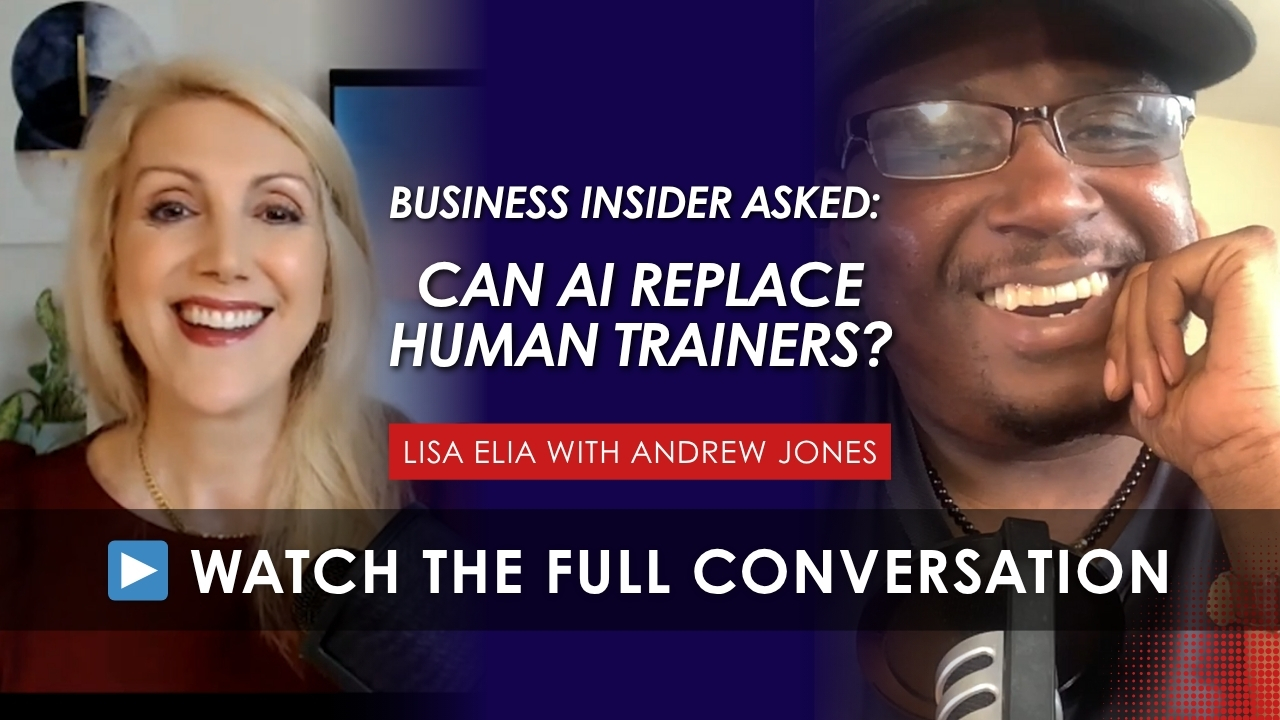
Business Insider Podcast Interview with Lisa Elia

Business Insider Podcast Interview with Lisa Elia

Business Insider Podcast Highlights

I had the pleasure of being interviewed by Andrew Jones for the Business Insider Podcast, where we discussed a wide range of communication-related topics — from how AI is influencing industries like mine, to what truly builds confidence, to the importance of understanding your own “secret sauce” as a professional or brand.

Andrew was a thoughtful interviewer, and our conversation touched on some of the most relevant challenges people face when communicating under pressure — whether it’s in the media, with investors, or on a public stage.

Below is a compilation of short clips from the interview. Each one highlights a different aspect of communication, from authenticity and confidence to adaptability in a rapidly changing world.

If you’d like to prepare for interviews like this, you can download my free Media & Podcast Interview Guide at
lisaelia.com/guide.

Lisa Elia, Media Trainer, Presentation Trainer, and Communication Expert, and Founder of Expert Media Training

About Lisa Elia

Lisa Elia is a leadership communication strategist who works with executives, founders, and expert teams to strengthen how ideas are communicated, understood, and acted upon inside organizations. Through her SpeakerShift Leadership Communication Accelerator and private advisory work, she helps leaders develop greater clarity, executive presence, and influence in high-stakes conversations—from leadership meetings and major presentations to investor discussions and critical organizational moments. Organizations also license her leadership communication programs to strengthen communication capabilities across their teams. Learn more at lisaelia.com.

To arrange a complimentary consultation, visit https://calendly.com/emt-appt/consultation-lisa-elia

Set Boundaries for Effective Media Interviews

Set Boundaries for Effective Media Interviews


Protect Your Message, Reduce Anxiety, and Align With Strategy

Fear before an interview or public appearance is often fear of the unknown—especially the “What if they ask me about ___?” spiral. One of the most effective ways to reduce that anxiety and protect your message is to set clear boundaries in advance: what you will and won’t discuss, and how you’ll respond when a line of questioning drifts outside those limits. It’s important to define this for any spokespeople who will face the media or podcast hosts. Boundaries aren’t evasive; they’re professional. They help you remain confident, conserve energy, and keep your narrative on track. For organizations, they are also essential safeguards—ensuring that spokespeople reinforce the company’s strategy and protect sensitive information.  


Why Boundaries Matter

Less fear, more control (for individuals).
Uncertainty fuels nerves. When you pre-decide what’s in-bounds and rehearse responses to sensitive questions, you eliminate much of the “unknown.” Confidence rises, and you feel more in control of the narrative.

Strategic focus over time (for organizations).
Stating and maintaining boundaries doesn’t just protect one interview—it sets expectations for future ones. Journalists and audiences learn what you will and won’t discuss, which shapes the types of questions and invitations you receive going forward.

Message protection (for everyone).
Not every topic deserves more oxygen. Boundaries help avoid giving airtime to distractions or controversies. At the organizational level, this prevents confidential details, unannounced financials, or legal issues from slipping into the public record.

Brand alignment.
Every spokesperson is a steward of the brand. Boundaries ensure that individuals’ personal disclosures or offhand remarks don’t conflict with the company’s core values, messaging priorities, or long-term strategy.

Identifying your own boundaries is powerful, but the real confidence comes when you practice them under pressure. That’s why live coaching and rehearsal with feedback are such important parts of media training.  


A Strategic Framework for Setting Boundaries

Click this quick-reference image to download and keep handy for future interviews.

Infographic: 5-part framework for setting interview boundaries—Need to Know, Nice to Know, Not for Public Consumption, Outside Your Scope, and Long-Tail Impact—with example boundary + bridge phrases.

  When preparing yourself—or your team—for interviews, use this five-part filter:

  1. Need to Know
    Facts that help the audience understand your work and make informed decisions. Share these clearly and consistently.
  2. Nice to Know
    Details that are interesting but not essential. Share selectively, only if they reinforce your message and fit within strategic goals.
  3. Not for Public Consumption
    Personal matters, legal or HR issues, client confidentiality, unannounced financials, proprietary data, and other sensitive areas. Decide in advance that these are off-limits. Respond unapologetically with: “We don’t share ___.” Then, pivot to a prepared talking point.
  4. Outside Your Scope
    Be clear on what you—or your team—can speak to with authority. Anything outside your area of expertise or responsibility should be redirected to the appropriate person. This prevents speculation and maintains credibility.
  5. Long-tail Impact
    If you answer this once, are you willing to answer it again and again? Could it spark more questions you don’t want in the spotlight? Consider the ripple effect before opening that door.

This framework provides a starting point. For organizations, boundaries should be tailored to your industry, compliance requirements, and brand strategy. That’s where structured training ensures consistency with all spokespeople.  


Aligning Boundaries With Company Strategy

This is where organizations often stumble. Individual spokespeople may prepare personal boundaries, but without alignment, they risk sending mixed signals. To prevent this:

  • Define organizational red lines. Leadership, PR, and legal should agree on topics that are categorically off-limits (e.g., pending litigation, unannounced partnerships, internal HR matters).
  • Prioritize strategic narratives. Identify the top 3–4 themes the company wants to advance in every media appearance. Boundaries should serve as guardrails that funnel conversations back to these points.
  • Assign ownership. Clarify who speaks to what (CEO, CFO, subject-matter expert, etc.). If someone is asked questions outside their scope of expertise or responsibility, they should confidently redirect.
  • Codify it. Document boundaries and talking points in a media guide or briefing memo so every spokesperson is aligned.
  • Train for consistency. Run simulations where team members are pressed with difficult questions to practice both setting boundaries and bridging back to strategy.


Common Boundary Categories

  • Personal life (family, relationship status, health)
  • Financials (compensation, investor details, non-public numbers)
  • Litigation, HR, or confidential internal matters
  • Client, patient, or customer identities (unless you have explicit permission)
  • Proprietary processes, security, or IP details
  • Politics or unrelated topics that don’t serve the mission
  • Anything outside professional scope or credentials

For companies: add internal alignment categories such as future product roadmaps, M&A discussions, investor communications, and regulatory matters.  


How to Communicate Boundaries (Without Derailing the Conversation)

The goal isn’t to stonewall. It’s to stay composed, protect credibility, and steer back to meaningful points.

Boundary + bridge formula: state the boundary briefly, then redirect to a relevant point. Examples:

  • Outside scope: “That’s outside my area of expertise, but what I can share is…”
  • Confidential/proprietary: “That information is confidential, but here’s what I can say…”
  • Personal boundary: “I keep my personal life private. What I can share that’s relevant here is…”
  • Ongoing/legal: “I can’t comment while that’s in process. What I can address is…”
  • If pressed: “Out of respect for the people involved, I won’t go into that. The important point for your audience is…”

Sample phrases can be useful, but the challenge is delivering them smoothly, without hesitation, and pivoting back to your message in real time. Practicing these scenarios in a safe environment makes all the difference.  


Rehearse and Stress-Test Boundaries

Preparation transforms boundaries from theory into instinct. For both individuals and teams:

  • Identify likely sensitive topics. Draft boundaries for each.
  • Create bridges that connect back to strategic messages.
  • Add proof points (brief examples, data, or results) to strengthen credibility.
  • Role-play under pressure. Practice with colleagues or trainers playing persistent journalists to build confidence.

At the company level, include boundary-setting in crisis simulations and executive media training so responses are consistent across all spokespeople. It’s one thing to run through answers on your own. It’s another to face rapid-fire, persistent questioning that simulates real media pressure. That’s why team drills and expert feedback are essential parts of high-level preparation.  


The Bottom Line

Setting boundaries is not about withholding information—it’s about serving the audience well while staying focused, confident, and aligned with your goals. For individuals, it reduces anxiety and sharpens delivery. For organizations, it protects the brand, keeps messaging consistent, and ensures every media interaction advances the strategy rather than derailing it.  


Beyond Boundaries: Total Communication Readiness

Boundaries aren’t just about protecting information—they’re about protecting your credibility. With expert training, you or your team can walk into any interview knowing exactly how to respond with composure and alignment. Just as important, we focus on elevating overall communication skills and establishing preparation rituals that calm nerves, sharpen focus, and ensure you step into every appearance with confidence and clarity.  

To strengthen your skills—or prepare your team to stay on message—set up a complimentary consultation with Lisa Elia: https://calendly.com/emt-appt/consultation-with-lisa-elia

For more strategies to prepare for interviews, download my free Media & Podcast Interview Guide.

Lisa Elia, Media Trainer, Presentation Trainer, and Communication Expert, and Founder of Expert Media Training

About Lisa Elia

Lisa Elia is a leadership communication strategist who works with executives, founders, and expert teams to strengthen how ideas are communicated, understood, and acted upon inside organizations. Through her SpeakerShift Leadership Communication Accelerator and private advisory work, she helps leaders develop greater clarity, executive presence, and influence in high-stakes conversations—from leadership meetings and major presentations to investor discussions and critical organizational moments. Organizations also license her leadership communication programs to strengthen communication capabilities across their teams. Learn more at lisaelia.com.

To arrange a complimentary consultation, visit https://calendly.com/emt-appt/consultation-lisa-elia

Lisa Elia, Media Trainer, Public Speaking Coach, and Investor Pitch Coach -- Founder of Expert Media Training

Media & Podcast Interview Guide created by Media Trainer and Public Speaking Coach Lisa Elia

Sharing Doubts Can Tank Others’ Confidence

Sharing Doubts Can Tank Others’ Confidence

Before Sharing Doubts About Others, Consider the Effects

Words carry immense power—the power to inspire, support, or uplift, but also the power to discourage, demotivate, and undermine. When it comes to sharing doubts about someone else’s plans or ideas, it’s crucial to pause and consider the potential effects of what we say. Even well-intentioned words can have unintended consequences, influencing not just the decisions of others but their confidence and emotional well-being as well.

Why People Share Their Doubts

People often share their doubts and fears about others’ plans for a variety of reasons, many of which stem from their own emotions, experiences, or intentions. Sometimes, these doubts come from a place of care and protection. They may want to shield someone from potential failure or harm, especially if they perceive the plan as risky or uncertain. For example, a parent might discourage a child’s unconventional career path, fearing it might not provide financial stability.

In other cases, doubts are shaped by the individual’s own insecurities or past experiences. People often project their fears onto others, assuming the same challenges or failures they faced will apply. Similarly, a lack of understanding about the plan or its context can lead to skepticism. Without fully grasping the vision, some may label it as unrealistic or impractical, inadvertently discouraging the person pursuing it.

At times, doubts are expressed with good intentions, such as offering constructive criticism or encouraging someone to think critically about potential risks. However, even when well-meaning, this feedback can undermine confidence if not delivered thoughtfully. Other motivations may include a desire to influence or control the decision-making process, fear of change, or even envy. In some cases, people simply don’t realize how their words can negatively impact someone’s confidence or resolve.

By understanding the underlying reasons behind expressed doubts, we can approach conversations with greater empathy and awareness. Thoughtful communication that considers the potential effects of our words can help ensure that our input uplifts rather than diminishes others.

The Effects of Doubts on Confidence and Performance

Research underscores the significant impact that expressed doubts can have on an individual’s confidence and subsequent performance. Studies reveal that negative feedback—even when constructive—can erode self-efficacy, the belief in one’s ability to succeed.

For example, Jing Zhou and Jennifer M. George (2001), in their study published in the Journal of Occupational and Organizational Psychology, highlight how negative feedback can increase sadness and emotional distress, which in turn diminishes motivation and performance on future tasks. Similarly, Aaron Wichman, Pablo Briñol, Richard Petty, Derek Rucker, and Zakary Tormala (2010), in their research “Doubting One’s Doubt: A Formula for Confidence” published in the Journal of Experimental Social Psychology, emphasize that exposure to doubt can significantly shape confidence levels, either bolstering or eroding them depending on context and follow-up interactions.

More recently, Eun Jung Kim and Kyeong Ryong Lee (2019), in their study published in BMC Medical Education, illustrated how negative feedback can reduce self-efficacy and increase hesitation, delaying action and hindering progress. Their findings, drawn from research conducted in South Korea, underscore the nuanced relationship between doubt and decision-making.

Another relevant study by Schmidt et al. (2020), published in PLOS ONE, explored the long-term effects of doubt on emotional well-being. Conducted at the University of Würzburg in Germany, this research revealed that chronic exposure to skepticism or negative feedback often leads to heightened anxiety and diminished confidence, impacting individuals’ ability to pursue and achieve their goals.

Why Refraining From Doubts Can Empower Others

Choosing to refrain from sharing doubts—or reframing them constructively—can have a profoundly positive impact. When we withhold unnecessary skepticism, we create space for others to build their confidence and take ownership of their decisions. Empowering someone with words of encouragement rather than doubt fosters resilience, self-trust, and motivation.

For instance, instead of pointing out potential pitfalls, consider highlighting the individual’s strengths and reminding them of past successes. This approach not only bolsters their confidence but also encourages a growth mindset, where challenges are viewed as opportunities rather than obstacles. Encouragement can inspire innovation and bold action, traits essential for achieving ambitious goals.

Balancing Constructive Feedback With Empathy

Of course, there are times when feedback is necessary and even critical to success. The key lies in how that feedback is delivered. Constructive feedback should be specific, actionable, and framed within a context of support. For example, instead of saying, “I don’t think this will work,” try, “Have you considered these potential challenges? Here are some ways you might address them.” This approach respects the individual’s agency while offering valuable insights.

Empathy is another crucial element. Before sharing doubts, take a moment to understand the person’s perspective and the effort they’ve invested in their plans. Ask yourself whether your feedback is truly necessary or if it’s driven by your own fears or biases. By centering the conversation on their needs and goals, you can ensure your words are helpful rather than harmful.

A Thoughtful Approach to Communication

Ultimately, the way we communicate about others’ plans reflects our values and priorities. When we choose to lead with encouragement and thoughtful feedback, we contribute to an environment where people feel supported to take risks and pursue their goals. Constructive communication isn’t about avoiding challenges but addressing them in a way that builds confidence and fosters growth.

Before sharing doubts, consider the potential effects. Reflect on whether your words align with the intention to support and uplift. With thoughtful communication, we can help others move forward with clarity and strength.

Lisa Elia, Media Trainer, Presentation Trainer, and Communication Expert, and Founder of Expert Media Training

About Lisa Elia

Lisa Elia is a leadership communication strategist who works with executives, founders, and expert teams to strengthen how ideas are communicated, understood, and acted upon inside organizations. Through her SpeakerShift Leadership Communication Accelerator and private advisory work, she helps leaders develop greater clarity, executive presence, and influence in high-stakes conversations—from leadership meetings and major presentations to investor discussions and critical organizational moments. Organizations also license her leadership communication programs to strengthen communication capabilities across their teams. Learn more at lisaelia.com.

To arrange a complimentary consultation, visit https://calendly.com/emt-appt/consultation-lisa-elia

Help Los Angeles Fire Victims Rebuild Their Lives

Help Los Angeles Fire Victims Rebuild Their Lives

Los Angeles is a city of contrasts, a place where creativity and culture flourish amidst a backdrop of beautiful landscapes and, yes, some Hollywood sparkle. But people often have funny ideas about LA. One persistent misconception is that everyone who lives there is rich—or that if you own a home in LA, wealth must come with it. The reality is far different.

Many of the people who lost their homes in the devastating fires had purchased those homes decades ago, back when prices were much more reasonable. These aren’t individuals with sprawling estates and second homes; they are hardworking people who built their lives in LA and stayed to raise families, build careers, and contribute to their communities. For them, the fires didn’t just destroy property—they wiped out entire lives. Many of these families now have nowhere to go and need help to rebuild from scratch.

How You Can Help

If you’re wondering how to assist these individuals in their time of need, Charity Navigator has compiled a list of top-rated organizations doing meaningful work to support fire victims. These charities are equipped to provide essential aid, from temporary housing to long-term rebuilding efforts.

You can find the list of trusted organizations here:
👉 Charity Navigator: Help Palisades Fire Victims

As Desmond Tutu wisely said:
“Do your little bit of good where you are; it is those little bits of good put together that overwhelm the world.”

A Personal Connection to LA

Although I no longer live in Los Angeles, I spent 25 incredible years there, and the city will always be a part of me. It’s a place brimming with inspiring, generous people. During my time in LA, I had the privilege of serving on committees to support victims of 9/11, children battling cancer, and individuals living with AIDS during a time when the diagnosis was often a death sentence. Time and again, I witnessed Angelenos step up, giving wholeheartedly and selflessly.

Now, many of those same generous souls need our help. They’ve faced an unimaginable loss, and this is our chance to show them the same kind of compassion they’ve extended to others.

Want to Make a Difference

Every donation, no matter how small, adds up to make a big impact. If you love LA as much as I do—or if you simply want to lend a hand to those in need–consider contributing. Together, we can help these families start to rebuild their lives.

👉 Charity Navigator: Help Palisades Fire Victims


Awareness of Your Communication Skills

Awareness of Your Communication Skills

Increasing Awareness of Your Communication Skills

You’ve probably heard or read this quote by George Bernard Shaw many times:

“The single biggest problem in communication is the illusion that it has taken place.”

I’m sharing it here because it speaks to the need to understand communication more deeply, starting with one’s own.

Some of the challenges of communication include:

      1. approaching situations with built-in biases and patterns learned in childhood or developed over the years;
      2. allowing assumptions about other people’s levels of knowledge and perspectives to influence how we communicate instead of learning more about them in advance;
      3. mistaking experience for expertise, assuming that daily communication equals proficiency;
      4. and the Dunning-Kruger effect, a cognitive bias that allows people to overestimate their knowledge or abilities in a specific area, even though they lack the necessary skills or experience. This often stems from a lack of knowledge or introspection.

Gaining and maintaining awareness of your communication skills and style requires conscious effort. However, the payoff is fantastic! Better communication skills can improve relationships, increase productivity, reduce errors, and create a more harmonious work environment.


Actions to Become More Aware of Your Communication Skills

    • Set up your phone or a camera to video record yourself going about your day talking to people. If you’re at work, let people know you’re recording and that only you will watch the video. Don’t record confidential conversations. Watch the video with the sound off to observe your body language. Then, turn it up to observe your verbal delivery. Look for behaviors and patterns you want to change, such as less-than-confident gestures, the overuse of filler words, poor posture, and a lack of pauses.
    • Keep a communication journal. After meetings or at the end of the day, record your thoughts and reflections on your interactions and what you might do to be more effective in the future. Make notes about others’ reactions to you and your interpretations of them. Did people seem confused or did they shut down? This will help you understand you need to make adjustments to your communications.
    • Review something you’ve written. Read it from the perspective of the recipient(s). Did you communicate your points clearly? Did the tone reflect the energy you wanted to project? Was it too abrupt? If someone had a very different frame of reference and read what you wrote, is there a possibility it could be misinterpreted? Try reading what you wrote with an angry tone of voice and see if your message could come across harshly. This will help you understand what you could do differently going forward, such as adding a warmer greeting or some words to soften the message or providing greater detail or clarity.

Every day, you have the opportunity to become a better communicator. It begins with awareness.

Want to gain greater awareness of your public speaking skills?

Take the Public Speaking Assessment that I created for my online courses. I’ve made it free for now. It’s private and only you will see the results, which will let you know what you do recommendations for areas that could use improvement.

Gain access to the free Public Speaking Assessment here.


Lisa Elia, Media Trainer, Presentation Trainer, and Communication Expert, and Founder of Expert Media Training

About Lisa Elia

Lisa Elia is a leadership communication strategist who works with executives, founders, and expert teams to strengthen how ideas are communicated, understood, and acted upon inside organizations. Through her SpeakerShift Leadership Communication Accelerator and private advisory work, she helps leaders develop greater clarity, executive presence, and influence in high-stakes conversations—from leadership meetings and major presentations to investor discussions and critical organizational moments. Organizations also license her leadership communication programs to strengthen communication capabilities across their teams. Learn more at lisaelia.com.

To arrange a complimentary consultation, visit https://calendly.com/emt-appt/consultation-lisa-elia

Tips for Being a Great Podcast Guest

Tips for Being a Great Podcast Guest

Productive Passions featured an interview with Lisa Elia on March 8, 2024.I had the pleasure of being a guest on Christy Tagye’s podcast, Productive Passions. We talked about many aspects of communication and public speaking and the importance of shifting your mindset to set you up for success and greater inner peace as a speaker and in other aspects of your life, and more.

You can listen to it on:
Apple
Podbean
Spotify
Amazon Music


If you’re going to be interviewed for a podcast, here are a few quick tips.

1. When you book the podcast, ask if there are some topics or questions that the host wants to cover. Even if you are provided with questions or topics, know that podcasts can move in a lot of directions, so be ready to talk about a variety of topics.

2. Listen to the podcast to get a feel for the interviewer’s style, the format and tone of the show, and the types of questions the interviewer asks. Some podcast hosts or their producers hold pre-calls to connect with their guests and talk about what they will discuss, but not everyone does this. Listening to several episodes of the podcast and researching the host will help you to feel like you already know them. This is the same advice I give people who are preparing for media interviews.

3. Consider who the audience is and what you want to share that will engage them or help them. Use words and phrases they will understand. If you’re addressing an audience within your industry or that’s on the same level as you in terms of business, you can use more sophisticated language and industry terms. If not, simplify your language and define terms that might be unfamiliar to them.

4. Know that podcasts generally have a more conversational, free-flowing cadence than most news interviews. You should prepare and rehearse responding to questions and speaking about your work and the ideas and stories you want to share, not aiming for verbatim memorization.

5. Don’t get too attached to your content. You might not have the opportunity to share everything you had hoped or planned to. Make peace with that.

6. When the podcast is released, share it with your network. Podcast hosts appreciate that, and this could make other podcast hosts more interested in working with you.

Lisa Elia, Media Trainer, Presentation Trainer, and Communication Expert, and Founder of Expert Media Training

About Lisa Elia

Lisa Elia is a leadership communication strategist who works with executives, founders, and expert teams to strengthen how ideas are communicated, understood, and acted upon inside organizations. Through her SpeakerShift Leadership Communication Accelerator and private advisory work, she helps leaders develop greater clarity, executive presence, and influence in high-stakes conversations—from leadership meetings and major presentations to investor discussions and critical organizational moments. Organizations also license her leadership communication programs to strengthen communication capabilities across their teams. Learn more at lisaelia.com.

To arrange a complimentary consultation, visit https://calendly.com/emt-appt/consultation-lisa-elia